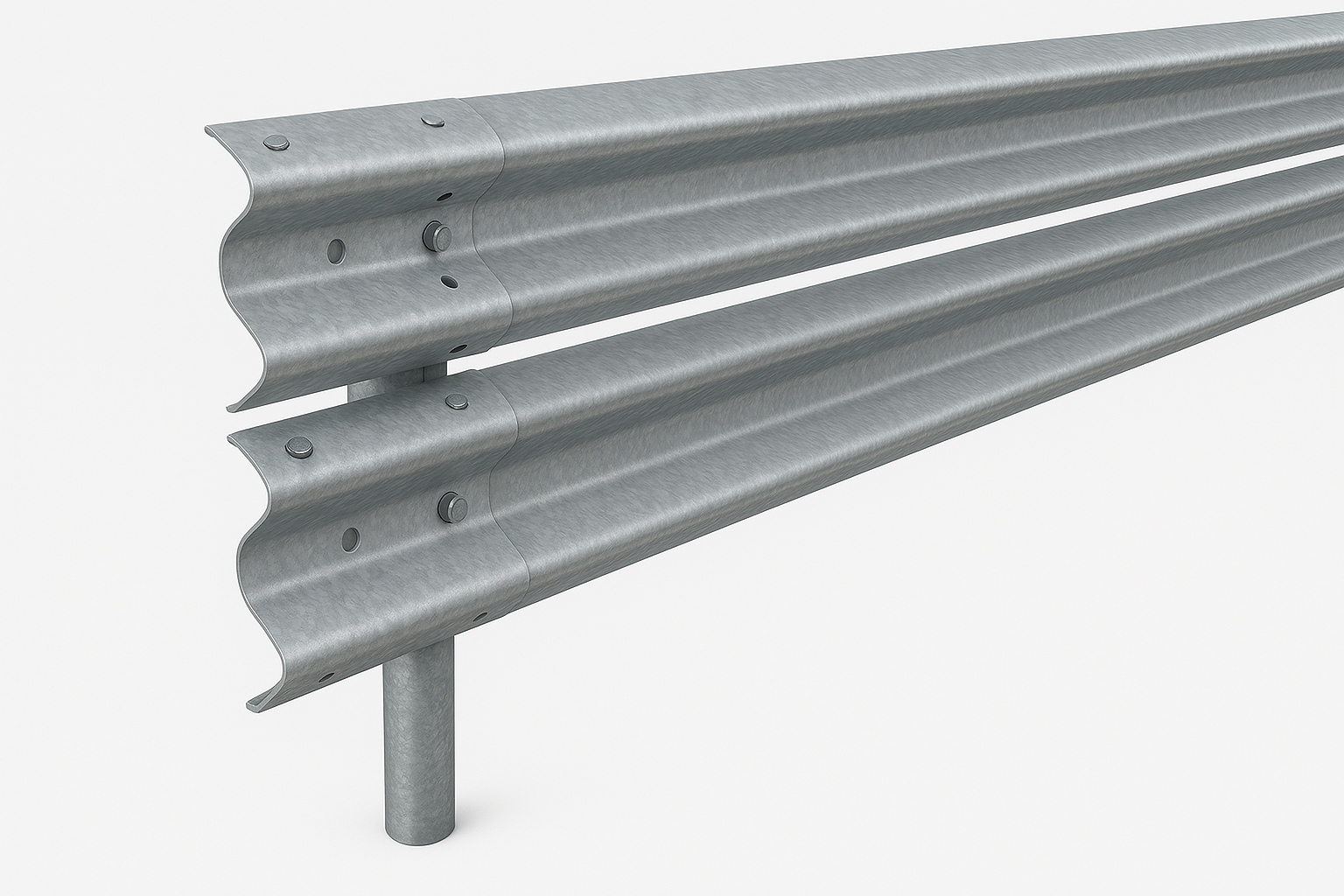
"Guard rail beams may not look glamorous, but they are a quiet testimony to engineering excellence — a constant reminder that safety doesn't always shout. Sometimes, it just stands firm."
Introduction
When we think of road safety, our minds often jump to seat belts, airbags, or speed limits. But there's
another critical component that quietly saves thousands of lives every year: the guard rail beam.
These seemingly simple roadside structures are anything but ordinary. With their strong steel curves and
engineered designs, they play a crucial role in minimizing damage during road accidents — often making
the difference between a close call and a catastrophe.
Guard rail beams, typically made of galvanized steel, are strategically placed along highways, bridges,
sharp curves, and steep embankments. Their purpose is to absorb impact, redirect vehicles, and
prevent them from veering off the road. Whether it's a speeding car losing control on a rainy night or a
distracted driver approaching a sharp turn, these barriers are engineered to take the hit — so you don't have to.
Types of Guard Rail Systems
There are several types of guard rail systems widely used on roads and highways across Kenya and East Africa.
Each type is designed for specific road conditions, traffic speeds, and structural requirements.
W-Beam Guardrail
The most common type — uses a "W"-shaped steel beam mounted on posts that flexes and deforms during impact to absorb crash energy. Widely used on highways and rural roads across Kenya.
Thrie-Beam Guardrail
Offers greater strength than the W-beam with three corrugations instead of two. Used in high-speed zones, steep drops, and locations where a higher containment level is required.
Cable Barriers
High-tension wire rope barriers offering greater adaptability on median and roadside installations. Effective at redirecting vehicles while minimizing injury severity on impact.
Why Placement & Installation Matter
It's not just about brute force. The effectiveness of a guard rail beam comes down to
strategic placement, proper installation, and regular maintenance. A poorly installed
or damaged rail can be worse than none at all. That's why transportation departments and civil engineers
conduct rigorous studies to determine where these rails should go and how they should perform under pressure.
-
Strategic Placement
Guardrails must be placed at identified high-risk zones — sharp curves, bridge edges, steep embankments, and areas with a history of run-off-road incidents.
-
Proper Installation
Post depth, beam height, and end terminal treatments must all meet engineering standards. Incorrect installation significantly reduces the barrier's ability to contain and redirect vehicles.
-
Regular Maintenance
Damaged or corroded guardrails must be repaired or replaced promptly. Routine inspections help identify weaknesses before they become life-threatening.
-
Material Quality
Hot-dip galvanized steel provides long-term corrosion resistance, ensuring the barrier remains structurally effective throughout its designed service life on Kenyan roads.
The Future of Guard Rail Technology
Modern technology is pushing guard rails into the future. Innovations already in development are set
to make even the simplest roadside elements smarter, stronger, and safer — transforming passive barriers
into active road safety systems.
Modular Systems
Pre-fabricated modular guardrail sections that can be swapped out rapidly after an impact, minimizing road closure time and restoring protection faster.
Smart Barriers
IoT-enabled barriers that report impact data, structural stress, and damage alerts in real time to road management authorities for immediate response.
Eco-Friendly Materials
Research into recycled steel and composite materials that maintain structural performance while reducing the environmental footprint of road infrastructure projects.
Vehicle-Compatible Design
Next-generation barriers engineered to interact safely with autonomous and electric vehicles, accounting for new vehicle weights and collision dynamics.
Conclusion
Guard rail beams may not grab headlines or turn heads, but they are one of the most critical elements
of modern road safety. Engineered to absorb impact and prevent vehicles from straying into danger,
these steel structures quietly save lives every single day. From highways to hilly terrains, their
presence brings a layer of protection we often take for granted. As technology and materials evolve,
so too will the capabilities of guard rails — but their core mission remains the same:
to keep drivers safe, no matter the road ahead.